
Table of Contents
Introduction to Charcuterie Board recipe
Have you ever wanted to impress your guests with a delightful spread that looks as amazing as it tastes? The Charcuterie Board recipe serves as the perfect answer to that desire. This beautifully arranged platter brims with a variety of cured meats, cheeses, fresh fruits, and more, transforming any gathering into a special occasion. Whether you’re hosting a casual get-together, a wine tasting night, or a holiday event, a Charcuterie Board offers a delicious way to accommodate different tastes and dietary preferences.
What makes this recipe even more special is its ease of preparation. You don’t need to be a gourmet chef to create an eye-catching display. Simply select your favorite ingredients, arrange them on a board, and voila! You’ve crafted a stunning centerpiece that invites socializing and enjoyment. Plus, with endless options for customization, you can make each Charcuterie Board recipe uniquely your own.
Imagine taking a bite of perfectly aged cheddar paired with sweet figs, or savoring the saltiness of prosciutto enveloped in ripe melon. The combination of flavors and textures creates a culinary experience that tantalizes the palate. Have you ever considered how this board not only satisfies hunger but also fosters connection? Sharing a Charcuterie Board recipe encourages conversation and interaction, making it an ideal addition to any social gathering.
Key Benefits of Charcuterie Board recipe
Why You’ll Love This Recipe
- Flavorful Variety: A mix of meats, cheeses, and accompaniments offers something for everyone.
- Visual Appeal: The colorful arrangement makes it a stunning centerpiece for any occasion.
- Social Experience: Encourages mingling and conversation among guests.
- Easy to Prepare: Requires minimal cooking, perfect for busy schedules.
- Customizable: Tailor the board to your preferences or dietary needs.
- Versatile Occasion: Works well for casual parties, holidays, or romantic dinners.
What Makes It Stand Out
The charm of a Charcuterie Board recipe lies in its originality and personal touch. With each ingredient carefully selected based on your preferences, the board feels unique and special. You can incorporate seasonal ingredients to reflect the time of year, or use local products to support area artisans and farmers. This fluidity allows for constant exploration of flavors that keeps you returning for more.
Additionally, the presentation of a Charcuterie Board can elevate a simple gathering into a memorable event. Its striking visuals draw guests to the table, creating a warm and inviting atmosphere. From casual gatherings to formal celebrations, a Charcuterie Board recipe stands out as a versatile option that can adapt to various settings.
Ingredients for Charcuterie Board recipe
Complete Ingredient List with Measurements
- Cured Meats:
- 4 oz prosciutto
- 4 oz salami
- 4 oz chorizo
- Cheeses:
- 4 oz cheddar
- 4 oz brie
- 4 oz goat cheese
- Olives:
- 1 cup assorted olives (green, black, or mixed)
- Pickles:
- 1 cup pickles (gherkin, dill, or bread-and-butter)
- Fresh Fruits:
- 1 cup grapes
- 1 cup mixed berries (strawberries, blueberries, raspberries)
- Nuts:
- 1 cup almonds or walnuts
- Crackers or Baguette Slices:
- 1 pack of assorted crackers or 1 baguette (sliced)
- Hummus or Dips (optional):
- 1 cup hummus or your choice of dip
Substitutes and Alternatives
If you have dietary restrictions, fear not! You can substitute ingredients to suit your needs. For instance, if you’re avoiding gluten, use gluten-free crackers or vegetable slices. For a vegan version, replace cured meats with marinated tofu or grilled vegetables, and select plant-based cheeses. Make sure to offer a variety of fruits and nuts to maintain that fresh and crunchy texture you’d want in a traditional Charcuterie Board.
How to Make Charcuterie Board recipe – Step-by-Step Directions
Step 1 – Prepare Ingredients
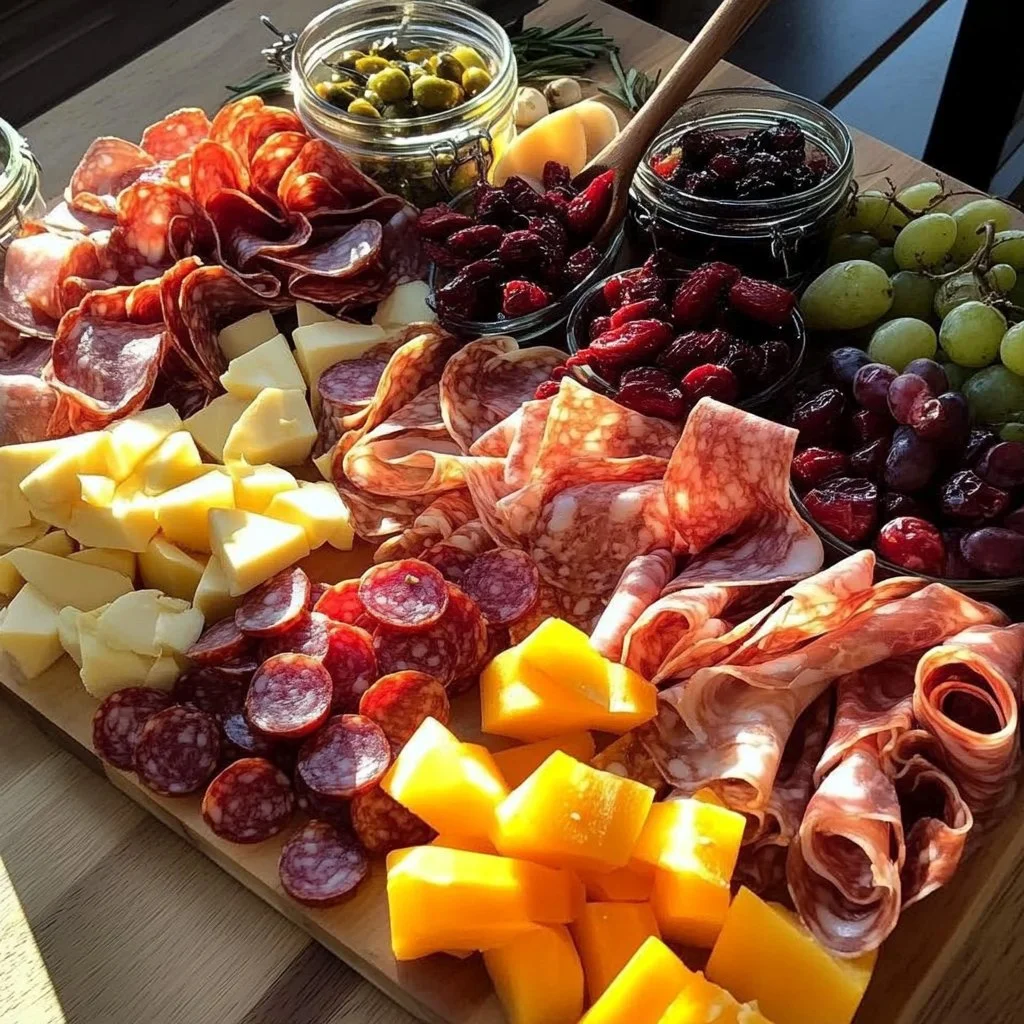
Gather all your ingredients and ensure they are fresh and ready. Slice the cheeses into bite-sized pieces and roll or fold the cured meats for an inviting presentation. Rinse fresh fruits and pat them dry to maintain their firmness.
Step 2 – Choose Your Board
Select a large, flat serving board or platter that will accommodate everything. Wooden boards, marble slabs, or even large dinner plates work beautifully.
Step 3 – Arrange Cured Meats and Cheeses
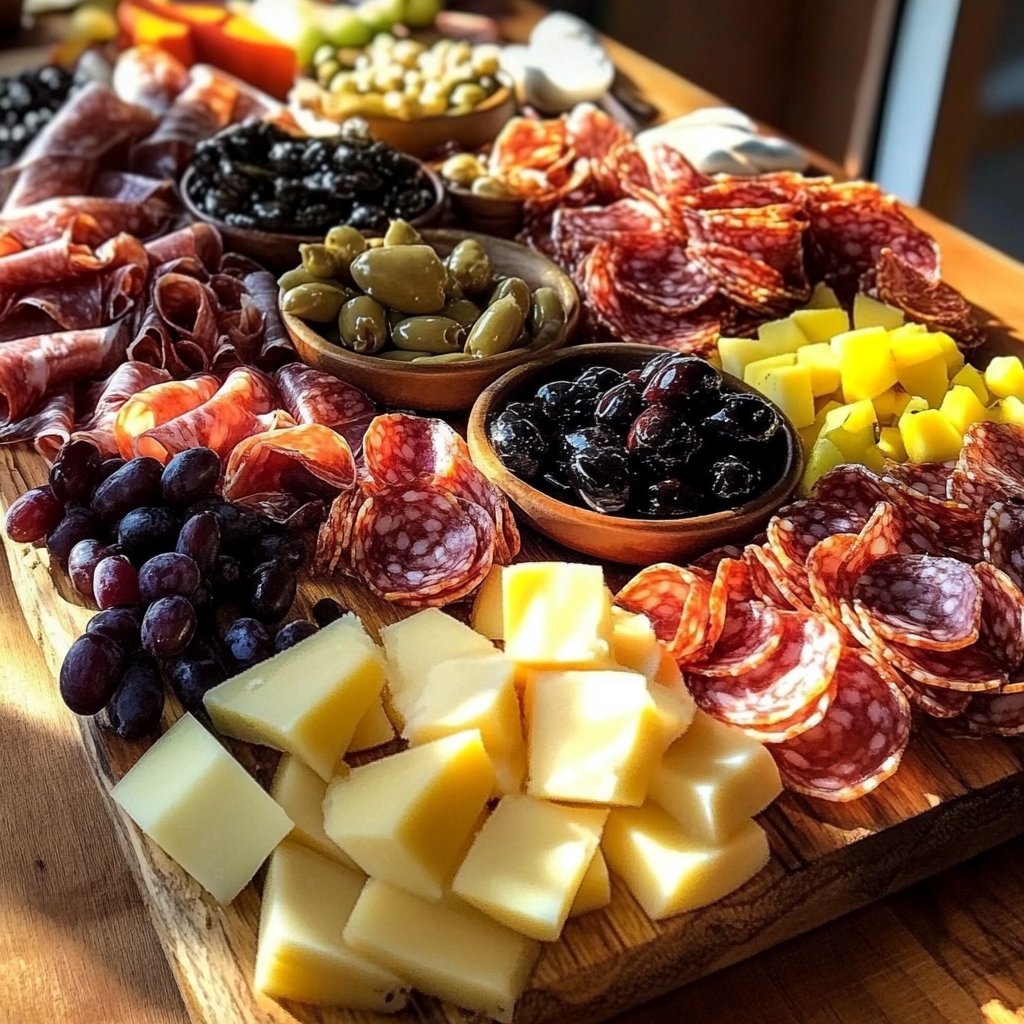
Start by placing the cured meats and cheeses on the board. Aim for balance; try clustering similar colors and textures together. Add some height by stacking meats or cutting cheeses into various shapes.
Step 4 – Incorporate Small Bowls
Add small bowls for olives, pickles, or any dips you wish to include. This keeps the ingredients separate and adds visual interest.
Step 5 – Fill In with Fresh Fruits and Nuts
Once your main ingredients are arranged, fill the empty spaces with fresh fruits and nuts. This not only adds color but also provides a fantastic contrast in flavor and texture.
Step 6 – Add Crackers or Baguette Slices
Surround your Charcuterie Board recipe with crackers or baguette slices. This adds a crunchy element and makes it easy for guests to help themselves.
Step 7 – Final Touches
Take a step back and look at your masterpiece. Feel free to adjust as needed, adding herbs or edible flowers for an extra pop of color.
Step 8 – Serve Immediately
Enjoy your beautiful Charcuterie Board recipe with your guests. It’s best served fresh to maintain the texture and flavor of all ingredients.
Serving Suggestions for Charcuterie Board recipe
Best Occasions to Serve This Dish
The versatility of the Charcuterie Board recipe allows it to shine at various occasions. For casual brunches, pair it with mimosa or coffee. Hosting a wine and cheese night? Choose wines that complement your selected meats and cheeses. During the holidays, a festive Charcuterie Board recipe can be a focal point at gatherings, encouraging mingling while adding elegance to the buffet.
What to Serve With It
Pair your board with a selection of beverages, like wine, craft beers, or cocktails. You might also want to offer dips like hummus, tzatziki, or even a spicy salsa to add more flavor options. For those who prefer a light salad, consider a fresh green salad as a refreshing accompaniment.
How to Store Charcuterie Board recipe Properly
Best Storage Practices
If you have leftovers, how you store them can affect taste and freshness. Wrap leftover meats and cheeses tightly in plastic wrap or store them in airtight containers. Store fruits in separate containers to prevent them from affecting the texture of meats and cheeses.
Reheating and Freezing Tips
Generally, ingredients in a Charcuterie Board recipe are best enjoyed cold. However, if you do have to reheat leftover meats, gently warm them in a skillet on low heat, being mindful of not cooking them again. Freezing is not recommended as it can compromise the quality of ingredients like cheeses.
Tips & Tricks for Charcuterie Board recipe
Mistakes to Avoid
- Overcrowding the Board: Make sure to leave space for guests to navigate and serve themselves comfortably.
- Forgetting Texture Variety: Balancing soft, hard, crunchy, and creamy textures enhances the experience.
- Neglecting Seasonal Ingredients: Incorporating what’s in season can elevate flavors.
- Lack of Color: Aim for a vibrant mix to appeal visually—colors engage the senses.
- Underestimating Quantities: Plan enough quantity to cater to your guest count and appetites.
Extra Tips for Better Results
- Use fresh herbs for garnish, adding an aromatic element.
- Offer a range of flavors—from sweet to savory—to satisfy all cravings.
- Experiment with new meats and cheeses to uncover unique flavors.
Recipe Variations of Charcuterie Board recipe
Creative Twists
Explore different themes with your Charcuterie Board recipe. A Mediterranean-inspired board could include hummus, pita, olives, and feta cheese, while a breakfast version could feature assorted pastries, fruits, and yogurt. Adventurous palettes might enjoy an international theme, showcasing meats and cheeses from different countries.
Dietary Adjustments
Creating a vegan Charcuterie Board recipe is simple; use plant-based cheeses and a variety of fresh vegetables. For gluten-free eaters, substitute crackers for slices of fresh vegetables, and add fruit skewers for sweetness. Customizing your board to cater to dietary restrictions is both considerate and creative.
Conclusion about Charcuterie Board recipe
Creating a Charcuterie Board recipe is not just about the food; it’s about the experience of sharing and enjoying a meal together. Its versatility and visual appeal make it suitable for any occasion, fostering connection and conversation among your guests. The ease of preparation allows you to focus on the company rather than the cooking. By incorporating seasonal and local ingredients, you can ensure fresh flavors and inspire creativity each time you make it. So why not gather your favorite ingredients and create a Charcuterie Board that reflects your style and taste?
FAQs about Charcuterie Board recipe
Can I make a Charcuterie Board recipe ahead of time?
Yes, you can prep ingredients a few hours in advance, but assemble it close to serving time to keep everything fresh.
What types of cheeses are best for the Charcuterie Board?
A mix of hard and soft cheeses is ideal. Consider cheddar, brie, gouda, and goat cheese for varied flavors.
How do I store leftovers from a Charcuterie Board?
Wrap any remaining meats and cheeses tightly and store in airtight containers in the fridge. Keep fruits separate.
How long can a Charcuterie Board sit out?
It’s best to serve the Charcuterie Board within two hours to ensure freshness and adherence to food safety guidelines.
Can I freeze any ingredients for later use?
Freezing is generally not recommended as it can alter textures. It’s best enjoyed fresh.
What alternative items can I use for a gluten-free board?
Use gluten-free crackers, or substitute crackers with sliced vegetables like cucumbers or bell peppers for dipping.
What dips pair well with a Charcuterie Board?
Dips like hummus, tzatziki, or a bean dip make fantastic options, adding complementary flavors to the board.
Is a Charcuterie Board suitable for kids?
Absolutely! You can include kid-friendly items like sliced cheese, fruits, and mild meats that appeal to younger tastes.
Charcuterie Board
Ingrédients
Cured Meats
- 4 oz prosciutto
- 4 oz salami
- 4 oz chorizo
Cheeses
- 4 oz cheddar
- 4 oz brie
- 4 oz goat cheese
Olives
- 1 cup assorted olives (green, black, or mixed)
Pickles
- 1 cup pickles (gherkin, dill, or bread-and-butter)
Fresh Fruits
- 1 cup grapes
- 1 cup mixed berries (strawberries, blueberries, raspberries)
Nuts
- 1 cup almonds or walnuts
Crackers or Baguette Slices
- 1 pack assorted crackers or baguette (sliced)
Hummus or Dips (optional)
- 1 cup hummus or your choice of dip Optional
Instructions
Preparation
- Gather all your ingredients and ensure they are fresh and ready.
- Slice the cheeses into bite-sized pieces and roll or fold the cured meats for an inviting presentation.
- Rinse fresh fruits and pat them dry to maintain their firmness.
Assembly
- Select a large, flat serving board or platter that will accommodate everything.
- Start by placing the cured meats and cheeses on the board; aim for balance.
- Add small bowls for olives, pickles, or any dips you wish to include.
- Once your main ingredients are arranged, fill the empty spaces with fresh fruits and nuts.
- Surround your Charcuterie Board with crackers or baguette slices.
- Take a step back and adjust as needed, adding herbs or edible flowers for an extra pop of color.
Serving
- Enjoy your beautiful Charcuterie Board with your guests. It’s best served fresh.